Pages

Showing posts with label 2.1.2 - A Computer. Show all posts

Thursday, July 4, 2013

A Computer (Part 7)

Ever since the world was created it has been possible to see the qualities of God that are not seen. I'm talking about his eternal power and about the fact that he is God. Those things can be seen in what he has made. So people have no excuse for what they do.  (Romans 1:20 NIrV)

I teach a class where I take apart the computer I mentioned about a week ago.  In this class I take apart the laptop, separating the major parts that are easily removable.  I then take those parts (about 10-12 of them) and give them to the participants.  I give them 5 minutes to put the computer together.  Sometimes they beat the clock.  Sometimes they don't.

Then I ask the critical question.  "If I took the laptop apart again and put the parts in a box and shook it randomly for 5 minutes, would the computer put itself back together again in a way that would work like it is now?"  The class always answers a resounding, "No!"  Of course not.  As a scientist, I would never believe something like that would happen.  The probability of that is statistically zero.

"What if I gave it more time, though.  Perhaps I could shake it randomly for a day...a month...a year...10 years...100 years...1000 years...a million years...a billion years.  Perhaps I could put it in outer space with little or no gravitational pull on it.  Then would it fit together in a way that would work?"  Class members always come to the same conclusion: "No!"  "Why not?", I ask.  "What would happen?"  They come to the same conclusion, "You would have a box of plastic and metal pieces, then dust."

Adding years to the timeline doesn't help them.  Adding more "ideal" conditions to the equation doesn't help them.  They can't take the leap of faith necessary to believe that the computer was put together by an explosion in a silicon, metal, and plastic factory.  They believe it was designed.  They believe it was purposefully created and put together in such a way that the computer works.

A computer has many more than 10-12 parts, but it only takes that many parts for us to see the need for a designer and a creator of the computer.  Over the past week, we have explored over 10 factors that need to be in place for life as we know it to exist.  Like the computer, there are many, many more factors necessary to sustain life.  How many does it take before we see the need for a Designer and a Creator?

You see, out of the two theories discussed earlier I have come to believe in the theory that states that God has existed forever.  That leap of faith is no larger than believing that "stuff" has existed forever.  I've come to believe that God designed and created the universe, putting everything right where He wanted it to be.  Then He created life as we know it and has been sustaining it ever since.  That is a much smaller leap of faith than asking me to believe there was an explosion of life-building-block-parts and that everything fell together in such a way to produce the world and the universe we experience now.

My faith is not blind.  It is based in reality.  The world around us is trying to point us to a Creator God...even in the world of science.  Some, unfortunately, are simply not willing to accept where the data is pointing them.  How about you?  Do you see Him?

Wednesday, July 3, 2013

A Computer (Part 6) - Atoms

He created all things in heaven and on earth, visible and invisible.  Whether they are kings or lords, rulers or powers- everything has been created through him and for him. He existed before everything and holds everything together. (Colossians 1:16-17 GW)


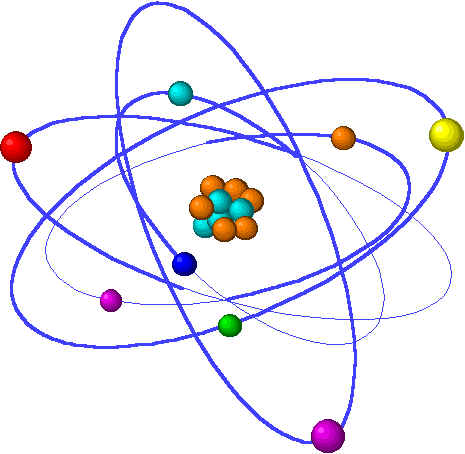
Let's go from the very large to the very small.  Let's go so small that no one has ever seen it.  Let's "look" at the building block of matter itself: the atom.


The study of atoms are at the "theory" stage  of our scientific endeavor. (It hasn't become a law yet.)  In this theory, three basic elements form an atom.  Protons and Neutrons hold together in the core of the structure, forming the nucleus.  Electrons orbit the nucleus in patterns which are being theorized now.  Protons are positively charged and hold the negatively charged electrons close at hand in their orbit.  The number of Protons, Neutrons, and Electrons determine the atom's type, atomic mass, and electrical charge.  Atoms interact with other atoms in ways that are predictable, making the whole science of chemistry (and biology, and even physics) possible.


The question I'm left with is this:  "What holds the atoms together?"  I understand that scientists will tell me it's the negative charge and relatively small mass of the electron that is held in orbit by the relatively large mass and positive charge of the proton.  But that doesn't answer my question.  What gives the proton the positive charge?  How does it keep a charge?  For that matter, what keeps the electron negatively charged?  Why don't we put that stuff in my cell phone battery?  What keeps the atomic mass of each atom at a constant rate?  What keeps the orbit exact for every atom of the same kind and what makes it so the atoms interact in such a predictable way that we can build entire scientific endeavors around these interactions?


The atom is the simplest structure science has to study.  It is the most basic building block for all other scientific studies.  It leaves us with more questions than answers.  All we know is that things work this way.  We don't know why.  I'm glad atoms hold together the way they do.  If they didn't, life as we know it would cease to exist.


Protons...Neutrons...Electrons...Electrical Charges...Orbits...Constant Atomic Mass...Predictable Interaction...Click...Click...Click...Click...

Tuesday, July 2, 2013

A Computer (Part 5) - Breathe

He doesn't need help from anyone. He gives life, breath, and everything else to all people. (Acts 17:25 CEV)


After the past several days, I need to just take a moment to slow down and breathe.  I traveled from Valparaiso, IN to Cincinnati, OH and back over a day and a half time period (stopping long enough to sleep some and enjoy some La Rosa's pizza with family).  After returning, I attended meetings, prepared videos, encouraged and prayed for the Life Bridge team, then left for Gurnee, IL to watch my middle child dance a Six Flags. (Late-night driving, tight schedules, and forty-four degree weather with sleet and 30mph wind-gusts couldn't stop this dad from supporting his children.)  The result?  My oldest is now home from college (for a little while), my second danced beautifully at her final Six-Flags performance, and my youngest is getting his birthday wish to have our whole family together.


Stopping to take a breath is good.  When I do, I sometimes think about where that breath comes from.  I remember that God first breathed into Adam the breath of life.  I remember that my body automatically remembers to breath even when I don't consciously, purposefully think about it.  I remember that without breath, my body would shut down much faster than without water or food.  Throughout history people have associated breath with life.


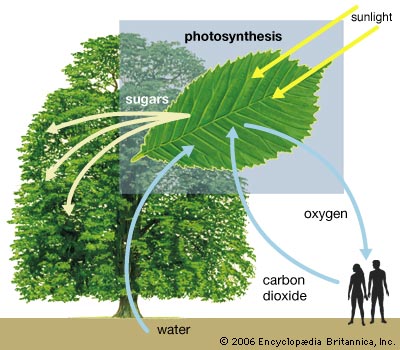
Then I start thinking about science again.  What do I need from the breath.  The answer is, of course, primarily Oxygen.  With all the people breathing in the world (not to mention all the animals), why don't we run out of Oxygen?  Oh, that's easy.  We learned this in grade school science class.  Green plants and trees produce Oxygen using a process called photosynthesis.  What do they need to perform this process?  Well, Water, soil, sunlight, and...wait for it....Carbon Dioxide...the very molecule we exhale as an unneeded waste from our breathing process.


No animals...no Oxygen.  No plants...no Carbon Dioxide.  We would use it all up.  But because there is a balance between these forms of life on the earth, life as we know it continues.  If there was an imbalance between the two, life as we know it would cease to exist.


Water, soil, sunlight, Oxygen, Carbon Dioxide, photosynthesis, lungs and the breathing cycle.  They all need to fit together like those pieces in a computer...click...click...click...

Monday, July 1, 2013

A Computer (Part 4) - Sun, Earth, Moon, Stars

The earth is the Lord's and all that is in it, the world, and those who live in it;  (Psalms 24:1 NRSV)
Yours is the day, Yours also is the night; You have prepared the light and the sun.  (Psalms 74:16 NASB)
When I look at the night sky and see the work of your fingers- the moon and the stars you have set in place- what are mortals that you should think of us, mere humans that you should care for us? (Psalms 8:3-4 NLT)
He determines the number of the stars and calls them each by name. (Psalms 147:4 NIV)


Speaking of the sun (since it brings the heat that helps the evaporation process), think about it for a moment.  Our earth rotates around the sun at just the right distance away from the sun.  If we drifted farther from the sun, the earth would freeze and life as we know it would cease to exist.  If we drifted closer to the sun, we would burn up and life as we know it would cease to exist.  We maintain just the right distance from the sun in a very (cosmically) narrow band of survivability.  The combined forces from the gravitational pull of the sun, earth, moon, and planets all keep us just the right distance away.


Oh yeah.  The size of the sun is very important, too.  If it was twice the size that it is now, things would be too hot.  If it were half the size it is now, things would be too cold.  Once again, life as we know it would cease to exist.


We worry about global warming causing us to burn up.  What about non-rotation?  What?  What are you talking about, Pete?  I mean the earth rotates.  This is really important for many reasons.  If the earth didn't rotate, one side of the earth would be too hot to survive and the other side would be too cold to survive.  Because it rotates at a rate of about one per day, the entire surface of the earth stays just the right amount of nice and toasty warm.


By the way, did you know the axis is tilted?  Yeah, we don't rotate simply around an axis that is straight up and down.  It's tilted!  Because of this, we have seasons!  When the "top" is closer to the sun, the weather is warmer at the "top" and colder at the "bottom."  The opposite is true as well.  The result, we have four seasons throughout the year, cycling life through the process we watch year after year.  Not tilted...no seasons.  The band of survivability on the earth gets really small since the "middle" (equator) would always be too hot and the extremes (North and South) would always be too cold!  Life-generating, cycling seasons would cease to exist.


The size of the sun, the gravitational pull of the sun-moon-planets, the distance between the earth and the sun, rotation on a tilted axis.  All of these things MUST be in place for life as we know it to continue to exist.  It's almost like more pieces of the computer that need to be in place for the computer to work.  Click...click...click...

Friday, June 28, 2013

A Computer (Part 3) - Water

"Take a long, hard look. See how great he is--infinite, greater than anything you could ever imagine or figure out! "He pulls water up out of the sea, distills it, and fills up his rain-cloud cisterns. Then the skies open up and pour out soaking showers on everyone. Does anyone have the slightest idea how this happens? How he arranges the clouds, how he speaks in thunder? Just look at that lightning, his sky-filling light show illumining the dark depths of the sea! These are the symbols of his sovereignty, his generosity, his loving care.  (Job 36:26-31 MSG)


There's quite a bit of talk about water right now.  Considerable rainfall has resulted in dangerous flooding conditions in more than one area in the United States.  We are affected by such tragedies because they are unusual, disruptive, and even devastating to our usual pattern of life.  Why?  What is "normal" when it comes to rainfall?  Where does the water normally go?  For that matter, where does it come from?


Well, we learned that in science class.  Remember?  Water on the ground evaporates, becoming "lighter" than air and the molecules ascend into the sky.  Once they get "up there", a combination of gravity, temperature changes, and the atmosphere all cause the water to stop going up, gathering into clouds.  These clouds gather more and more water until gravity and other forces finally cause the clouds to "let go" of their payload, dropping the water back to earth in the form of rain, hail, sleet, or snow.  This whole process is one that we call, "The Water Cycle."


Now scientists tell us that we need water to survive.  Our survival time is directly connected to factors such as temperature and the presence of shade.  The bottom line is this, though.  Without water, we would not survive.  The sun, heat, evaporation, the atmosphere, gravitational pull, air movement...each of these things must be in place for the water cycle to work, for water to remain on the earth, for us to have cleaned water to drink.  Without the water cycle, life as we know it would cease to exist.


It's almost like multiple pieces of a computer that must be in place in order for the computer to function.  Click...Click...Click...I'm glad each piece is in place.

Thursday, June 27, 2013

A Computer (Part 2)

Thank You for making me so wonderfully complex! Your workmanship is marvelous—how well I know it. (Psalms 139:14 NLT)


So, now I am in a quandary.  I go to church and the minister tells me that God made everything.  I go to science class and the professor tells me everything happened by accident.  I don't want to go against God or believe in something I shouldn't, but I don't want to be an idiot with a blind faith that has no basis in reality either.  What do I do?


Well, I did what any good scientist would do.  I began to research.  I started looking into things a little deeper to see what the scientific facts would show me.  You know what it showed me?  The universe is a lot like a computer.  Ok, maybe it's my pension for computer technology that leads me down this path, but hear me out anyway.


I own an old laptop computer that had a Pentium 75 MHz Processor, a 120MB Hard Drive, and 20MB of RAM.  It's greatest feature was it's ability to easily remove and replace just about any part of it: drives, batteries, even the screen!


Anyway, as I was studying this issue and taking this computer apart I realized the similarities.  Computers don't function properly unless you have all the right parts in place.  Even when all the parts are in the right place, the computer won't work unless each individual part is working correctly.  So it is with life.


Life as we know it can only exist when everything fits together correctly.  Not only that, each part needs to function properly or life as we know it would cease to exist.  Stay tuned for a few examples over the next several days...

Wednesday, June 26, 2013

A Computer (Part 1)

Thank You for making me so wonderfully complex! Your workmanship is marvelous—how well I know it. (Psalms 139:14 NLT)

Scientists have been teaching you and I for many decades now, that the earth,the universe, and life are all here by accident.  They have a set of theories as to how that happened.

First, an explosion of extremely hot and dense matter took place about 13.7 billion years ago.  That explosion sent things out great distances, cooled the matter, and eventually took the configuration that we experience today.  This theory has been coined as "Big Bang."

Once the hunk of rock we live on fell into the orbit around our star (the sun), the right conditions came into place which spontaneously generated amino-acids...the building blocks of life.  Those building blocks, over time, joined together to form the simplest of single-cell organisms, then more complex, and so on until we have all the life forms we have today.  This process of moving from no life, to life, to more complex forms of life is known as "Evolution."

In the scientific community, the combination of "Big Bang" and "Evolution" provide the most accepted and tested theories of the origin of the universe and life.  Notice that "Big Bang" does not give us the way matter came into existence.  It simply tries to explain how the universe reached the state that it is today.  Evolution, however, does attempt to explain the origin of life.

Going back to my earlier posts, then, we have two competing theories for the origin of the universe and life.  
  • The first theory says that God has existed forever.  Then, "God created the heavens and the earth" ex nihilo (out of nothing) and created life.  From then on, life has regenerated itself much in the say ways we can observe scientifically today.
  • The second theory says that matter has existed forever.  Then a great explosion sent this matter all over the universe to create today's configuration.  When conditions were favorable, life was formed and then evolved into all the variations of life we experience today.
Two sets of theories attempt to provide the answers to my original question.  Where did we come from?  Consider a tree...